
As a San Diego Realtor and National Real Estate Investor, I’ve closely examined the San Diego and national housing markets to assess whether a crash is looming. With high home prices, elevated mortgage rates, and shifting economic conditions, both buyers and sellers are understandably cautious. Below, I dive into the current state of the San Diego housing market, compare it to national trends, and evaluate the likelihood of a market crash based on available data and expert forecasts.
San Diego Housing Market: A Resilient but Cooling Market
San Diego’s housing market remains one of the most competitive and expensive in the United States, driven by its desirable coastal location, robust economy, and limited housing supply. Key metrics paint a picture of a market that is cooling but far from collapsing:
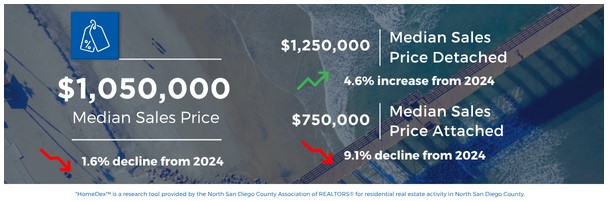
- Median Home Prices: The median home price in San Diego ranges from $901,022 to $1,015,000, significantly higher than the national median of $403,700. While prices have softened slightly (down 0.5% year-over-year in some reports), they remain elevated due to persistent demand and low inventory.
- Inventory Levels: Inventory has increased, with active listings rising significantly compared to previous years. This rise gives buyers more options, but the market still favors sellers, with a median sale-to-list ratio hovering close to 1.0.
- Days on Market: Homes are selling relatively quickly, averaging 21 to 37 days on the market, though this is slower than peak frenzy levels. Coastal and well-located properties often sell in as little as two weeks.
- Demand and Competition: Approximately 37% to 41% of homes sell above asking price, indicating continued competition, particularly for desirable single-family homes in central and coastal neighborhoods. However, bidding wars are less intense than in prior years.
Factors Driving San Diego’s Market
San Diego’s market is shaped by several structural and economic factors:
- Limited Housing Supply: Geographic constraints (ocean to the west, mountains to the east) and strict zoning regulations limit new construction, keeping inventory tight and supporting high prices.
- Strong Economy: San Diego’s diverse job market in technology, defense, tourism, and healthcare attracts professionals, fueling housing demand alongside stable employment levels.
- High Mortgage Rates: With 30-year fixed mortgage rates hovering between 6.5% and 7%, affordability is strained, pushing some buyers to negotiate or delay purchases. This has increased rental demand, with San Diego’s rental market remaining competitive.
- Investor Activity: Cash buyers and investors, particularly those targeting fixer-uppers or properties with accessory dwelling unit (ADU) potential, continue to drive demand in certain submarkets.
San Diego Forecast
Forecasts for San Diego suggest moderate growth rather than a sharp decline:
- Zillow predicts moderate single-digit growth in home values, with minor localized seasonal fluctuations.
- Realtor.com projects steady price appreciation driven by ongoing supply constraints and buyer demand.
- Some analysts warn of potential price flattening or slight adjustments due to trade uncertainties and fluctuating sales volume, but anticipate a quick recovery.
Overall, San Diego’s market is expected to remain resilient due to its strong fundamentals, though short-term price adjustments are possible as buyers gain more negotiating power.
National Housing Market: Stable But Affordability-Challenged
Nationally, the U.S. housing market is characterized by high prices, improving inventory, and persistent affordability challenges. Key metrics include:
- Median Home Prices: The median existing-home price sits near record highs around $400,000, showing modest year-over-year gains.
- Inventory Levels: Inventory is growing as unsold homes increase year-over-year. This equates to a 3.5 to 4-month supply, still below the 5 to 6-month range of a balanced market.
- Days on Market: Homes are taking slightly longer to sell nationally, averaging around 40+ days compared to tighter timelines in previous years.
- Sales Activity: Existing-home sales reflect affordability constraints, though the National Association of Realtors (NAR) predicts moderate volume gains as inventory improves.
Factors Shaping the National Market
The national market is influenced by broader economic trends:
- High Mortgage Rates: Rates for a 30-year fixed mortgage averaging in the mid-to-upper 6% range discourage some buyers and keep sellers with low-rate mortgages locked in.
- Affordability Crisis: High home prices and rates have made homeownership challenging, particularly for first-time buyers. However, stricter lending standards since the Great Recession reduce the risk of widespread defaults.
- Inventory Growth: New construction and a modest increase in existing-home listings are easing supply constraints, but the market remains undersupplied compared to pre-COVID levels.
- Economic Policies: Macroeconomic policies, potential tariffs, and immigration changes could influence construction costs and inflation, potentially impacting mortgage rates.
National Forecast
Expert predictions for the national market vary but generally point to stability:
- The Mortgage Bankers Association forecasts home price growth slowing to low single digits.
- NAR predicts steady modest price increases, with sales rising as inventory improves.
- Redfin estimates single-digit rises in median asking prices with relatively flat rent growth due to new rental inventory.
- Long-term projections suggest annual appreciation of 3% to 5%, with no major crash expected unless significant economic shocks occur.
Is a Housing Market Crash on the Horizon?
San Diego: Low Crash Risk
A housing crash in San Diego is unlikely for several reasons:
- Strong Fundamentals: The city’s robust job market, limited supply, and desirability as a place to live support stable prices. Unlike the 2008 crash, which was driven by loose lending, current lending standards are strict.
- High Equity: Record home equity levels allow homeowners to sell under favorable terms if needed, drastically reducing foreclosure risk.
- Moderate Corrections: While some forecasts predict slight price dips, this is far from a crash, which typically involves rapid, double-digit declines.
- Investor Demand: Cash buyers and investors continue to stabilize the market, particularly in high-demand neighborhoods.
However, risks such as trade wars, rising mortgage rates, or a broader economic downturn could slow growth or lead to temporary localized price adjustments.
National Market: Crash Unlikely but Risks Remain
Nationally, a crash is also not on the horizon, supported by:
- Stable Demand: Despite affordability challenges, pent-up demand from buyers and sellers continues to drive solid transaction volume.
- Equity and Lending Standards: High homeowner equity and strict lending practices mitigate foreclosure risks, unlike the subprime crisis of 2008.
- Inventory Growth: Increasing supply from new construction and existing homes is normalizing the market, reducing the likelihood of a bubble.
Potential risks include:
- Policy Impacts: Tariffs or regulatory shifts could raise construction costs and inflation, pushing mortgage rates higher and dampening demand.
- Foreclosure Uptick: Slight increases in foreclosure filings have occurred, though levels remain well below historical crash averages.
- Regional Variations: Markets that saw extreme overbuilding face higher risks of localized price declines, but these are not indicative of a sweeping national crash.
Conclusion: No Crash, but Caution Advised
Both the San Diego and national housing markets are poised for moderate growth and stabilization, with no immediate signs of a crash. San Diego’s resilience stems from its strong economy, limited supply, and high demand, while the national market benefits from improving inventory and stable lending practices. However, affordability challenges, high mortgage rates, and potential policy shifts warrant caution.
Advice for Buyers, Sellers, and Investors
- Buyers: In San Diego, focus on well-priced properties in desirable neighborhoods, as competition remains high. Nationally, take advantage of growing inventory to negotiate better deals, but don’t wait for massive price drops. Work with a local real estate agent to navigate hyper-local conditions.
- Sellers: In San Diego, price competitively and highlight your home’s best features to stand out in a cooling market. Nationally, prepare for longer selling times and ensure your home is move-in ready to attract buyers.
- Investors: San Diego’s ADU potential and rental demand make it a strong long-term investment. Nationally, focus on markets with stable job growth and avoid overbuilt areas.
The housing market is complex, but by staying informed and acting strategically, you can navigate these challenges and opportunities with confidence.
If you are looking to sell a home, check out how we differentiate in the market by looking into our Maximum Bid Home Sale System, which transcends most Real Estate Markets
For personalized strategy or guidance on buying, selling, or investing in San Diego, reach out to Darel Ison at [email protected] or (858) 229-1625.